Folk CRM Pricing (2026): Plans, limits & hidden costs
Lightfield
Quick summary
Folk CRM is designed for small teams doing relationship-led outreach via LinkedIn and email. It has three paid tiers — Standard, Premium, and Enterprise — with no free plan listed, only a two-week trial. The annual entry price ($24/user/month) looks reasonable, but deal management is gated behind Premium, and the price doubles the moment you need core sales features.
Is Folk still worth the price?
Folk positions itself as the simple, affordable alternative to bloated CRMs like HubSpot and Salesforce. That framing holds for a solo user doing lightweight contact management.
But the moment you need deal tracking, email sequences, dashboards, or API access, you're pushed to Premium — which doubles the price.
Enrichment credits are shared workspace-wide on Standard: 500 credits per month for the entire team, not per user. A team that enriches contacts steadily can use that up within a month. The question isn't whether Folk is cheap to start — it's whether the upgrade path makes sense as your team grows.
CTA: Book a demo
For revenue leaders
Folk suits small teams doing relationship-led outreach. Once you have a sales team with a repeatable motion, you typically need deal management, reporting, and shared context in one place. Lightfield is built for that stage and keeps the record current from real conversations.
Why listen to us
Lightfield is an AI-native CRM built for founder-led sales teams and growing revenue teams. We compete in the same space as Folk, which gives us a clear-eyed view of where well-designed platforms still create friction in daily use — pricing included. We're not neutral, but we are specific.
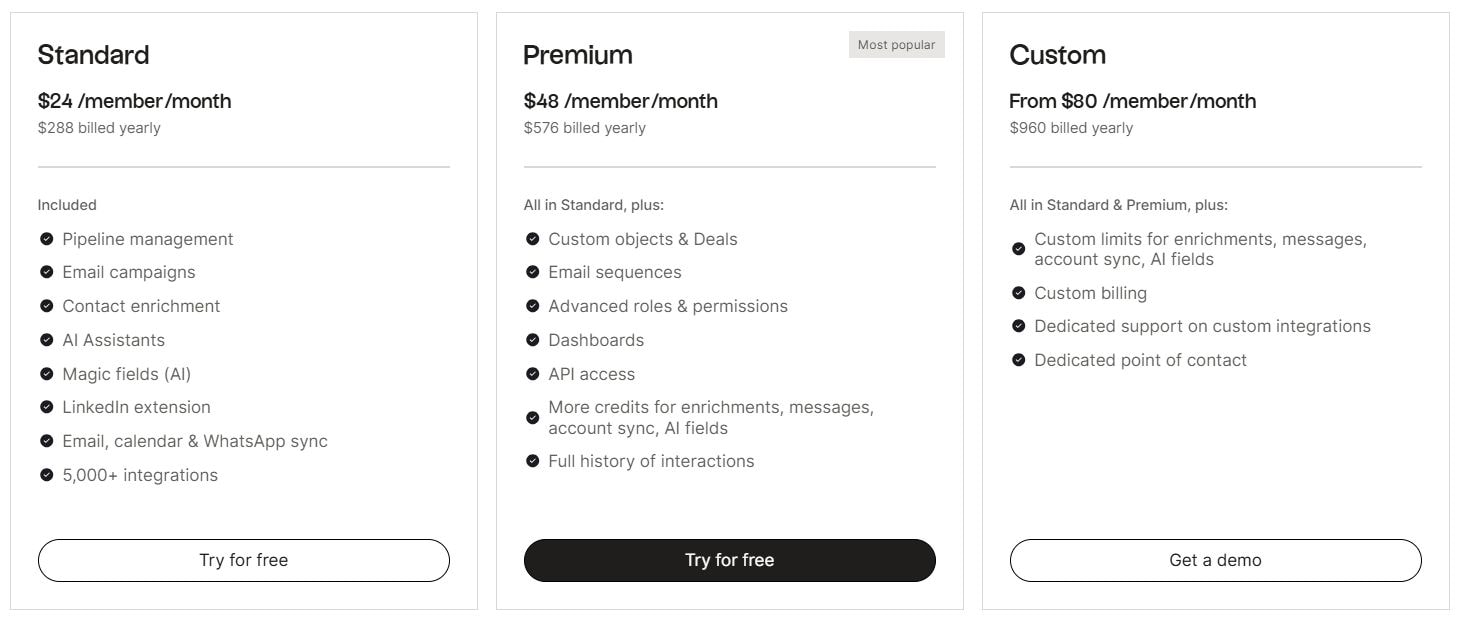
Folk uses per-seat pricing with three tiers: Standard, Premium, and Enterprise. Both monthly and annual billing are available; annual billing saves roughly 20%.
Folk's pricing page lists no free plan. Folk offers a two-week free trial that defaults to Premium features. When the trial ends, your account is blocked until you upgrade, or you can request a one-week extension manually.
Monthly prices: Standard $30, Premium $60, Enterprise from $100 — all per user per month. Annual prices: Standard $24, Premium $48, Enterprise from $80. A five-person team on Standard (annual) pays a little over $100/month. The same team on Premium pays over $200/month.
Folk pricing breakdown
| Plan | Monthly Price | Annual Price | Best For |
|---|---|---|---|
Standard | $30/user/mo | $24/user/mo | Solo users or small teams doing basic contact management and email campaigns |
Premium | $60/user/mo | $48/user/mo | Teams that need deal pipelines, email sequences, dashboards, and API access |
Enterprise | From $100/user/mo | From $80/user/mo | High-volume teams needing custom credit limits, dedicated support, and enterprise permissions |
1. Standard: Entry-level CRM
Standard is Folk's starting point for teams that want a simple, spreadsheet-style CRM without the setup overhead of a full platform.
Price: $30/month, or $24/month billed annually, per user.
What's included: Pipeline management, email campaigns (up to 2,000 sends per user per month), folkX Chrome extension for LinkedIn capture, email/calendar/WhatsApp sync, contact enrichment, AI Assistants, Magic Fields (AI auto-population), and 5,000+ integrations via Zapier and Make.
What's not included: Deal management (custom objects), email sequences, dashboards, API access, advanced roles and permissions, full interaction history.
Credit limits (workspace-wide, not per user): 500 enrichment credits per month, 2,000 Magic Field credits per month.
Key limitations: The 500 enrichment credits are the most important number on this plan. That limit applies to the entire workspace — not each user. A five-person team enriching 100 prospects each uses the whole month's limit in one pass. Teams doing serious outbound volume will need to supplement with an external enrichment tool or move to Premium, which doubles the limit to 1,000.
Best for: Solo founders or freelancers doing lightweight LinkedIn-based outreach who don't need deal tracking or multi-step sequences.
2. Premium: Advanced collaboration
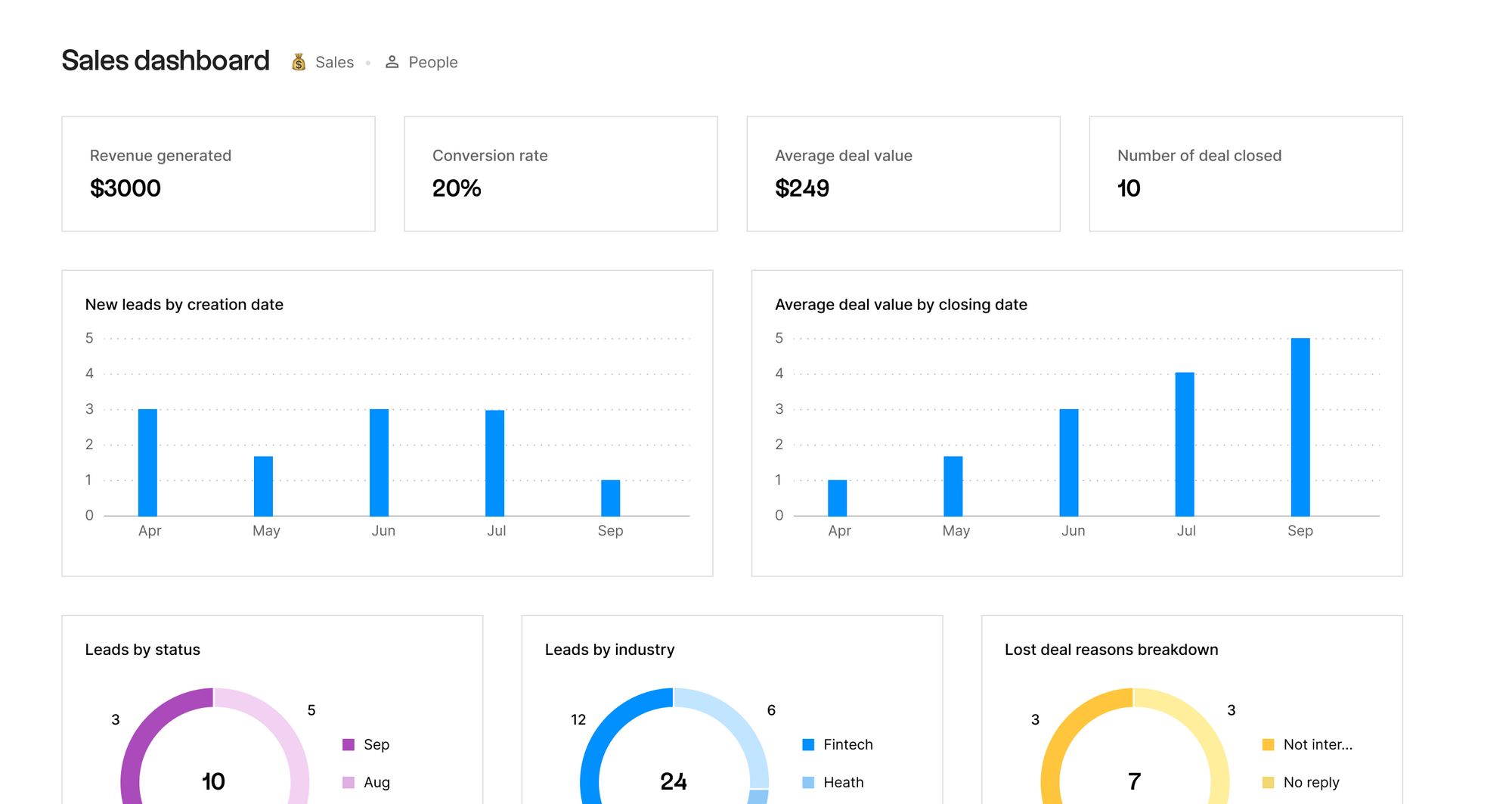
Premium is where Folk starts to function as a proper sales CRM rather than a contact database.
Price: $60/month, or $48/month billed annually, per user — exactly 2x Standard.
What it adds over Standard: Custom objects with deal management, email sequences (multi-step automated follow-ups), dashboards for pipeline reporting, API access, advanced roles and permissions, full history of interactions, and higher credit limits across enrichments, messages, and Magic Fields.
Credit limits: 1,000 enrichment credits per month (workspace-wide), 5,000 messages per user per month, 5,000 Magic Field credits per month (workspace-wide).
Key limitations: The jump from $24 to $48 per user per month (annual) is steep when deal management and email sequences are table-stakes features at competitors' entry tiers. A five-person team goes from $100/month to $200/month just to unlock pipelines. That's not an upgrade for power users — it's the floor for a functioning sales team.
Best for: Small sales teams of three to ten people that need structured deal tracking and outreach automation.
3. Enterprise: High-volume operations
Enterprise adds custom usage limits for enrichment, messages, account syncs, and AI fields, plus security controls, group-level permissions, a dedicated account manager with 1:1 onboarding, custom integrations, and priority support.
Price: Starts at $100/month, or $80/month billed annually, per user.
What it adds over Premium: Custom usage limits, security controls, group-level permissions, 1:1 onboarding with a dedicated account manager, priority support, and custom integrations, and a named point of contact. Several Folk users have noted publicly that the combination ends up being more cost-effective than Enterprise — with more flexibility on the enrichment side.
Key limitations: At about three times the Standard price, you are paying for custom limits plus security controls, group permissions, and a dedicated account manager. For teams doing serious outbound volume, the per-contact cost of enrichment at this tier is high compared to pairing a capable CRM with a standalone enrichment tool like Apollo or Clearbit.
Best for: Larger teams or agencies with high-volume enrichment and messaging needs that have outgrown Premium's credit limits.
What Folk doesn't include in the price
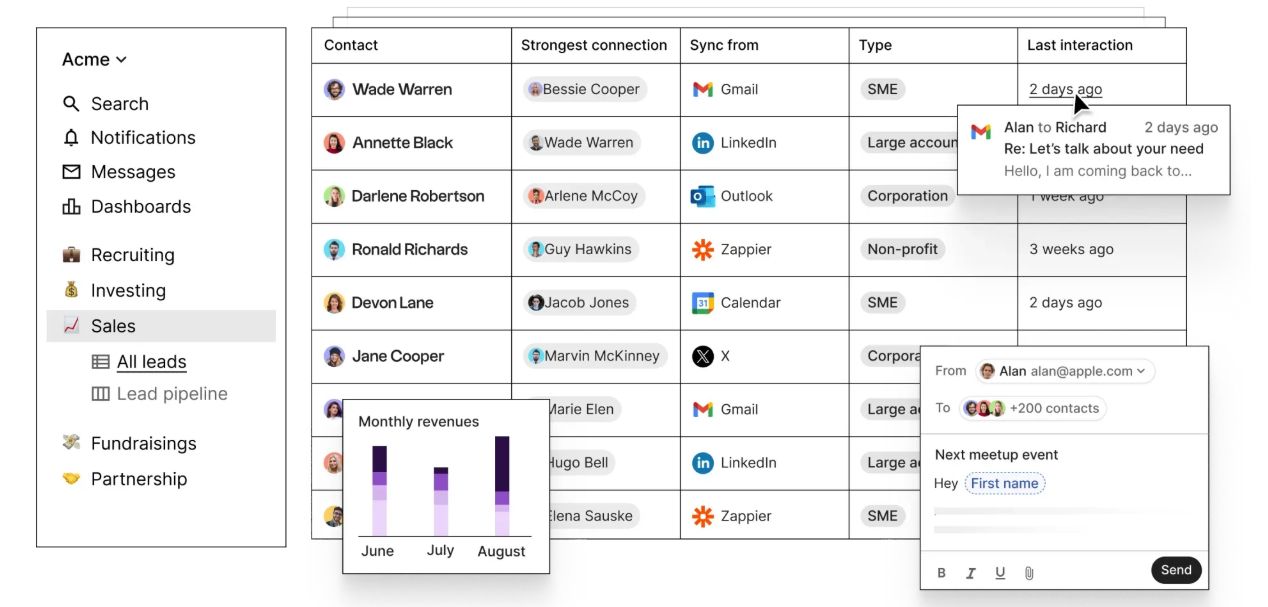
The headline per-user price is only part of the story. Here's what adds up on top of it.
1. Enrichment credits are workspace-wide, not per user
Standard gives the entire team 500 enrichment credits per month. Premium doubles it to 1,000. For any team doing consistent outbound, those limits disappear fast — and the options are to upgrade to Enterprise, pay for a separate enrichment tool, or slow down prospecting. This is the single biggest hidden cost in Folk's pricing structure.
2. Deal management is locked behind Premium
If you sign up for Standard expecting a full pipeline CRM, you'll hit this wall immediately — and the only fix is doubling your bill. Many CRMs include deal management at their entry tier; Folk treats it as a premium feature.
3. API access is gated to Premium and above
Standard users don't get API access, so custom connections to external tools run through Zapier, Make, or MCP instead of the REST API. For teams building automation, that can add cost and maintenance overhead.
4. No native mobile app
Folk has a desktop app but no iOS or Android app. For founders and sales reps who manage relationships between meetings or while traveling, this is a real limitation. (Note: some sources from 2024 reference a mobile app in development — verify on the Folk website at time of publication, as the pricing page and current reviews still reflect no mobile app.)
5. No free plan and trial friction
The two-week trial defaults to Premium features. When it ends, the account is blocked — not downgraded. You can request a one-week extension, but Folk's pricing page lists no free tier to fall back to. Teams that built workflows during the trial period face a hard upgrade decision with a short window to make it.
Is Folk good value for founder-led and growing sales teams?
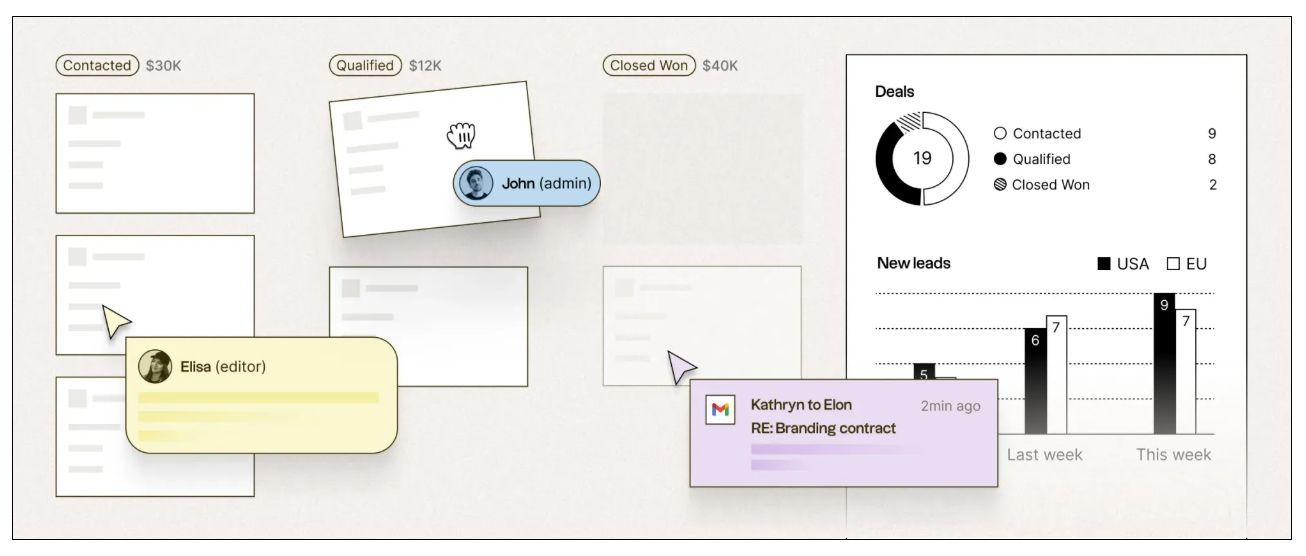
Where Folk works
For a solo founder doing primarily LinkedIn-based outreach and contact management, Standard is a reasonable starting point. The folkX Chrome extension, email sync, and spreadsheet-style interface are genuinely well-designed for lightweight relationship tracking.
If your primary workflow is finding people on LinkedIn and sending email campaigns, Folk's tooling is a good fit at $24/user/month (billed annually).
Where it breaks down
Founder-led and growing sales teams typically need deal tracking, sequences, and some form of reporting — all gated behind Premium. A three-person founding team on Premium (annual) is paying about $144/month and still sharing limited enrichment credits across the workspace. The per-person cost isn't outrageous, but the feature-to-price ratio at that tier is where the value starts to slip.
The scaling problem
Folk's pricing doubles at each step, but the gaps between Standard and Premium are significant enough that most active sales teams will need Premium within the first few weeks. The real cost of Folk for a founder-led or growing team isn't $24/user — it's $48/user (billed annually).
And at that price point, it's worth comparing against tools that include call recording, deal management, and meeting-based record updates in one product.
If your team's primary source of sales insight is meeting conversations and email threads, Folk's tooling — which focuses on contact capture and outreach — will only get you partway there.
Lightfield: A Folk alternative for founder-led and growing sales teams
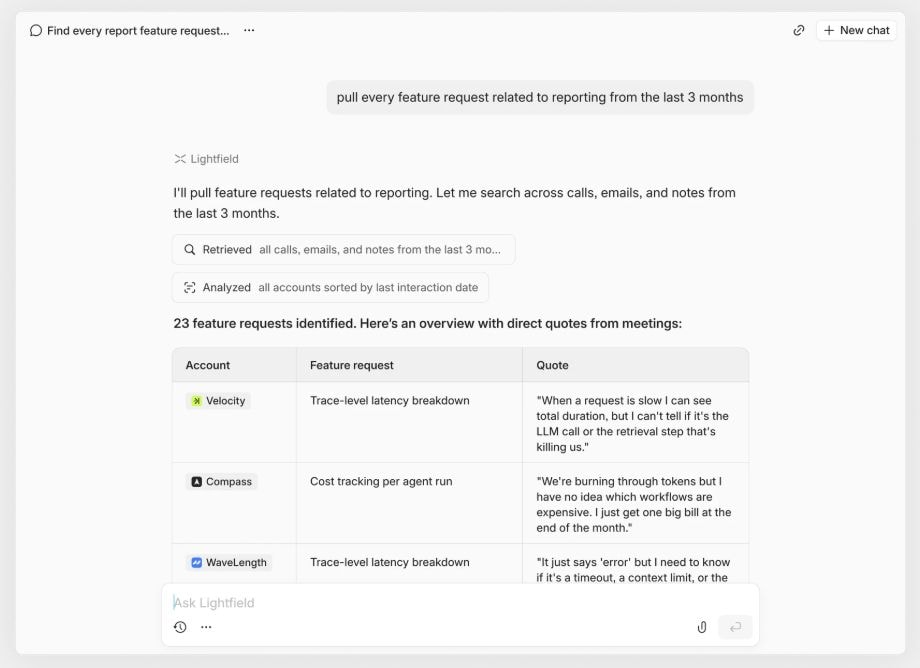
Lightfield is built around a different premise: the most valuable sales data already exists in the emails, calls, and meetings your team is already having.
Instead of asking you to manually log interactions or use enrichment credits to fill in contact fields, Lightfield captures everything automatically — call recordings, email threads, meeting notes — and turns that into structured CRM records. Contacts, accounts, opportunities, and follow-up tasks are created and updated from the conversations themselves.
There's no schema to configure before you get started and no gated deal management. Connect your email and calendar and the product starts building your CRM from your existing interactions.
It's built for founders and sales teams running 10+ meetings a week — where conversation context is the most valuable sales data and no one has time to maintain a CRM manually.
Lightfield pricing
Starter
$89/user/month, up to 3 users. 14-day free trial.
Larger teams doing more complex agentic work can move to a team plan with unlimited viewer seats.
Pro
Visit lightfield.app/pricing for details.
Growth
Visit lightfield.app/pricing for details.
Why people choose Lightfield
1. AI-native from the ground up — not a legacy CRM with AI bolted on
Lightfield was built to ingest unstructured conversation data — transcripts, emails, call recordings — and turn it into structured records automatically.
The AI isn't a layer on top; it's how the product works at the core. That's a different architecture than adding an AI assistant to a traditional contact database.
2. Replaces multiple tools
A Folk setup for a sales team that records calls typically means Folk for contact management plus a separate recording and transcription tool, such as Grain or Fireflies, connected through an integration.
Lightfield handles call recording, transcription, AI summaries, and follow-up drafting in one product — with everything linked to the right account and opportunity automatically.
3. AI-filled custom fields
Create a custom field today, say "competitor mentioned", and turn on AI Fill. Lightfield suggests values from new emails and meetings, and you review each suggestion before it applies. To fill the field from past conversations, ask the agent in chat to update your records retrospectively.
4. Zero setup overhead
There's no schema to configure, no pipeline stages to define, and no import process before the product becomes useful. Connect your email and calendar and Lightfield starts building your CRM from your existing interactions. Most teams see value within the first day.
5. Built for meeting-heavy teams
Lightfield is specifically designed for teams doing ten or more sales meetings a week, where conversation context — what was said, what was promised, what the next step is — is the primary source of deal intelligence. The product is optimized for that workflow in a way that contact-focused CRMs like Folk aren't.
6. Published plans with pooled credits
Lightfield Starter ($89/user/month, up to 3 users) includes the self-updating CRM, meeting recording, and Chat, with custom objects and pipelines on every plan. Records go up to 50,000 on Starter, 250,000 on Pro, and 750,000 on Growth. On Pro and Growth, agent work draws on pooled workspace credits.
Choose the CRM that works every time
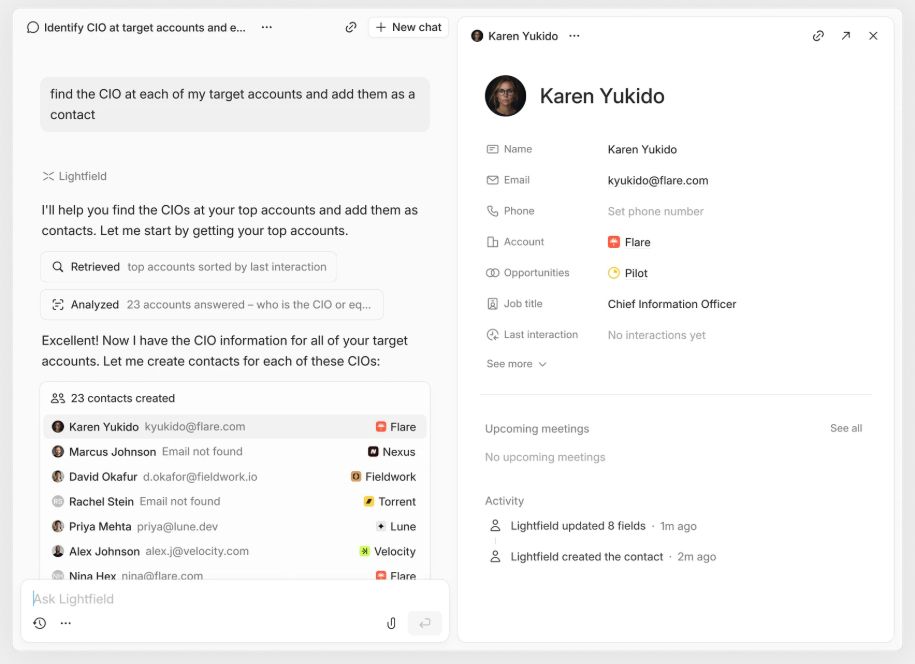
Folk is a solid lightweight CRM for solo users who want a clean contact database and LinkedIn integration. But the pricing structure pushes growing teams into expensive upgrades just to access core sales features — deal tracking, sequences, and reporting — that most alternatives include from the start.
Lightfield takes a different approach. It captures customer context automatically, with pipelines and custom objects on every plan. No gated pipelines, no manual logging.
If your team runs on meetings, emails, and calls, Lightfield keeps every conversation in one place — and turns it into pipeline data without the manual overhead.