Turning a founder’s selling judgment into a playbook your team follows
Lightfield
A founder’s selling judgment becomes a team playbook when it’s written down where new sellers and agents can both use it. This page covers what a playbook holds, where it lives in Lightfield, and how people stay in the loop.
What a founder’s playbook holds
We think a playbook is a set of decisions: which questions to ask on a first call, what to do after each kind of meeting, how to answer the objections buyers raise most, and what a healthy deal looks like at each stage. Many founders carry these decisions in their heads and apply them deal by deal. A new seller sees the outcome of each decision but rarely the reasoning behind it.
Where the playbook lives in Lightfield
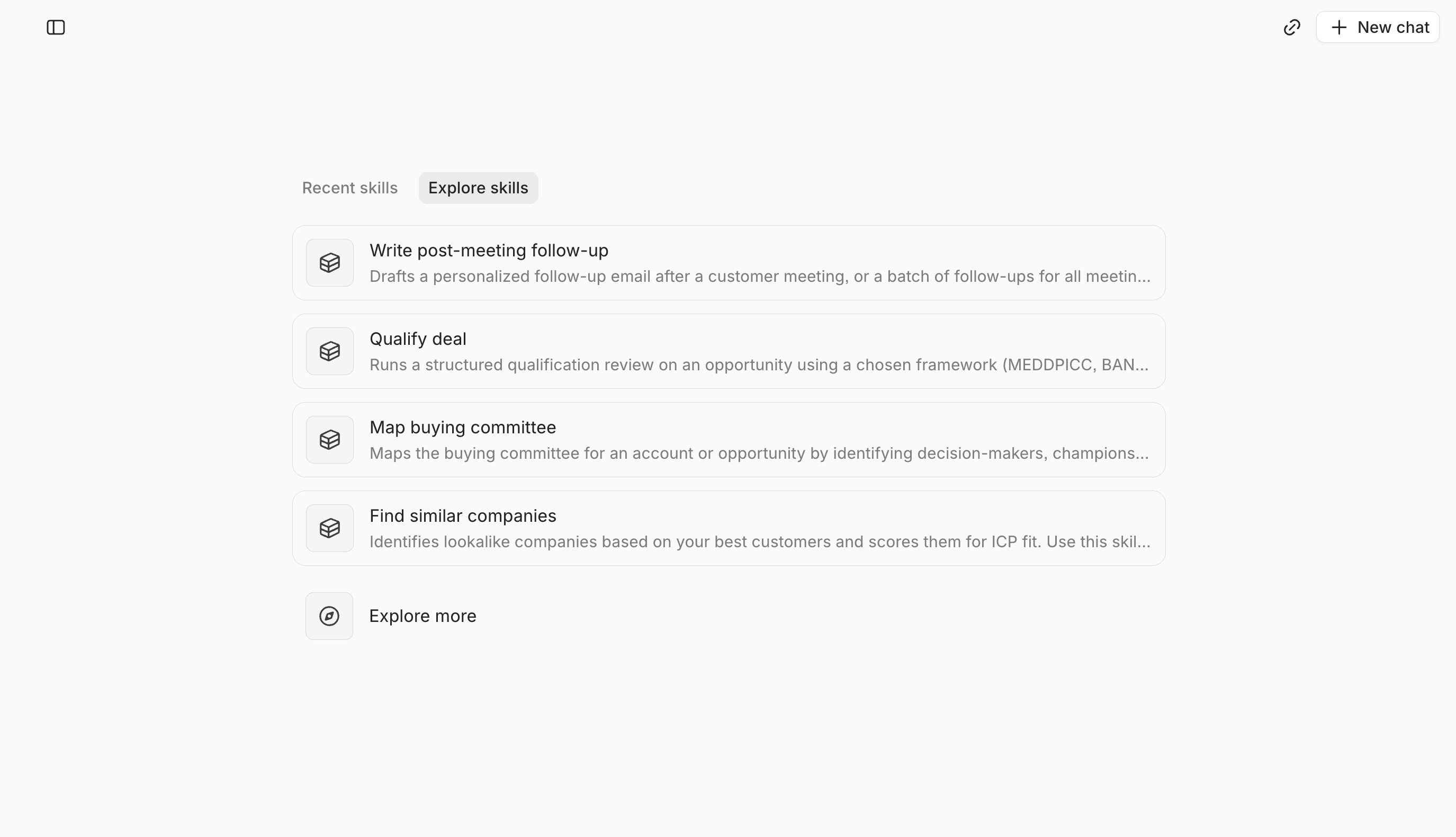
Lightfield has company Knowledge and repeatable Skills that teach agents how your business operates. You build them, you own them, and you can read and edit them.
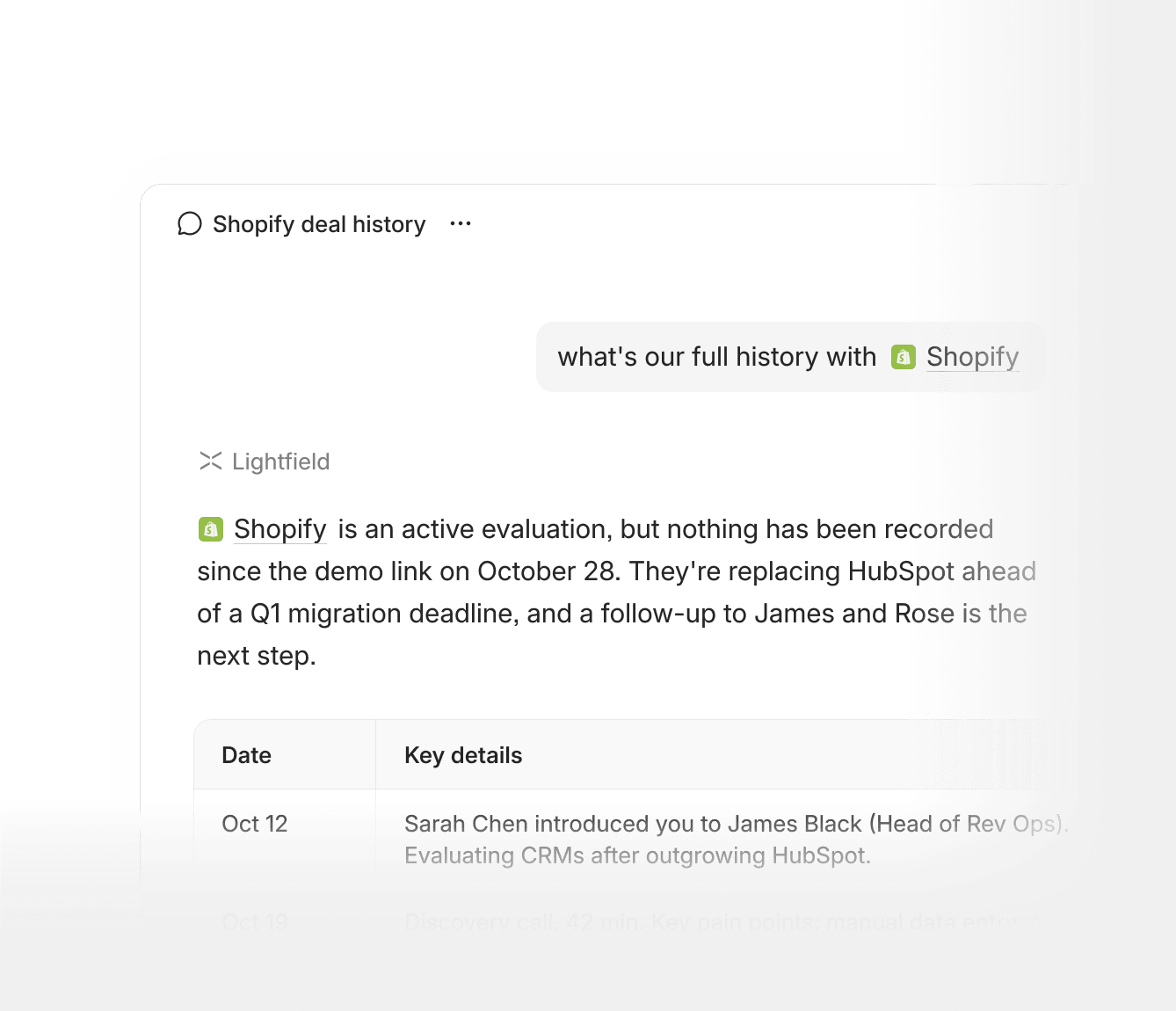
Agents work from the same Knowledge and the same customer history your sellers see, so a playbook written once applies to the agent and the new hire alike. Agents work within your permissions and settings, so a person stays responsible for what goes out.
Power put its playbook into Lightfield as Knowledge. Brandon Li, Power’s co-founder, said: “We can build in custom deal coaching in Lightfield for a more complicated enterprise sale, pull in best practices from other sales leaders that we respect, and follow our playbook to make sure we’re running the play that we know works in our market at the right time.” Before a deal review, a Power rep can run the deal-coaching Skill against an opportunity to see which play fits and what questions to resolve first.
Write a playbook in four steps
- Write each play as a short instruction in your own words. Start with the plays your best seller repeats most.
- Add each instruction to your company Knowledge, or define it as a Skill when it’s a repeatable task.
- Run the instruction against three recent deals and compare the output with what the founder would have done.
- Change the wording where the output differs, then share the playbook with the team.
Scorecards and coaching reviews
Lightfield can score calls and deals against a rubric and review coaching themes by rep. Your team defines what a good call looks like, and the review runs as a Skill.
FAQ
What do Knowledge and Skills do?
Both teach agents how your business operates. Skills are the repeatable pieces. You own both and can read and edit them.
Do agents follow the playbook without review?
Agents work within your permissions and settings, and a person stays responsible for what goes out.
Who owns the playbook?
You do. Knowledge, Skills, and Automations are yours to build, read, edit, and own.
Can a playbook draw on practices from other sales leaders?
Yes. You write the playbook in your own words, so you can include practices from leaders you respect. Power’s co-founder describes doing this, as quoted above.
How do I check that a playbook works?
Run it on recent deals and compare the output with what your best seller would have done. We think a playbook earns trust when the team can see where it differs.
Who is this for?
Founders and go-to-market teams at high-growth B2B companies that are building a team.